Louis Theroux’s recent documentary Inside the Manosphere shines a light on online spaces where sexism and hostility towards women are normalised, packaged as “advice”, and amplified for profit. But one thing many viewers noticed was whose voices weren’t represented in the programme: women and girls. In this blog piece, Tish Feilden focuses at the impact on the manosphere’s impact on young women.
Right now, a lot of children are growing up feeling that they have less control and less agency in their lives, and less belief that their choices have purpose and impact. This uncertainty can play out differently for boys and girls. For some boys, it can tip into a desire to feel more powerful, and the obvious place that shows up is in social relationships, because that’s where their developing brains are wired to look for status, belonging and meaning.
The complexities of relationships with girls have always been there, but they feel more exaggerated now and social media makes boys more vulnerable to polarising, black-and-white explanations. If something they scroll past offers a shortcut to “confidence” or “control”, especially when it looks like empowerment, it can be very tempting to believe it.
So what is the impact of all this on girls and young women? Girls often end up fragile in this landscape: the question of who you have to be to be acceptable to men (which has always been there) is now playing out in public, every day. Online judgement can turn quickly into humiliation and shaming, and that pressure doesn’t just sit on a screen; it follows girls into school corridors, friendships and their sense of self. National data shows that girls are unhappier, suffer with more anxiety and report the lowest sense of belonging at school compared to their male counterparts, and things are even worse for girls facing socio-economic disadvantage. But is this really a surprise when misogyny is part of their daily reality?
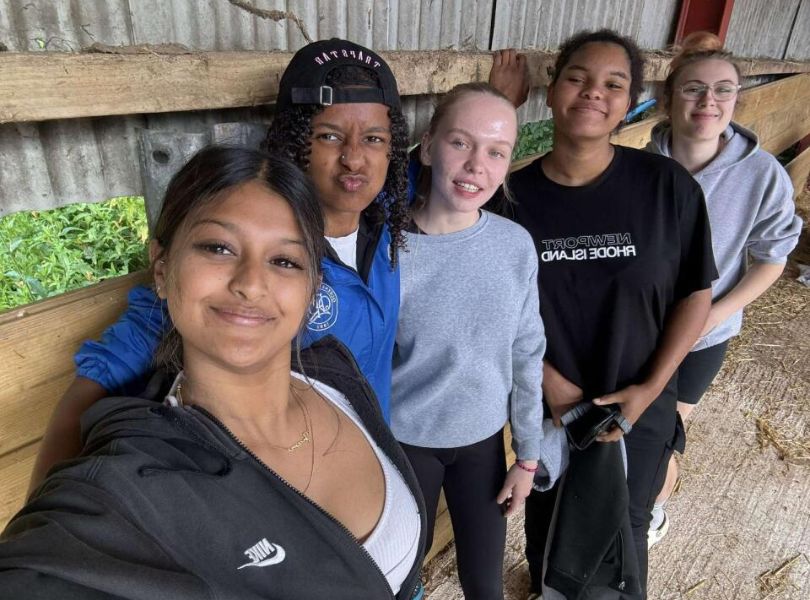
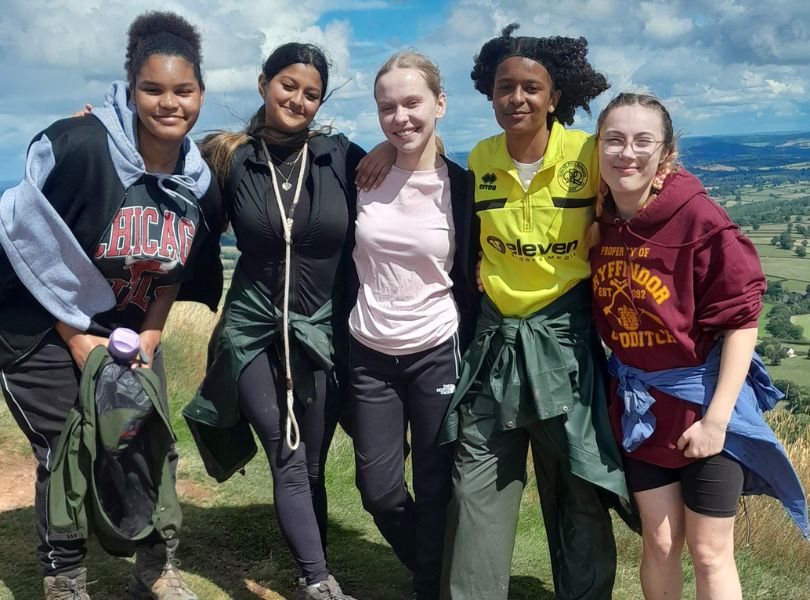
We asked some of the girls and young women from Jamie’s Farm Youth Champions to describe what it feels like to grow up in this environment: what they’re hearing from boys, what helps, and what needs to change, exploring the impact the manosphere has on young women.
“It’s complicated”
The young women we spoke to described facing real tension between more open conversations about gender equality and feminism on one side, and a suffocating atmosphere of pressure and judgement of women and girls on the other. Social media often sits at the centre of that conflict.
“Growing up as a young woman right now can feel complicated. On one hand there are more opportunities and conversations about equality, but at the same time social media spreads a lot of misogynistic ideas and puts pressure on girls to look or act a certain way.”
One respondent described social feeds that feel “more hostile”, where men post about how they expect women to behave and look- reducing girls to “a sexual symbol instead of a human being”. The result is a kind of relentless self-monitoring: how you speak, how you look, what you do, and how it might be interpreted.
“You’re constantly exposed to images and videos that create unrealistic expectations about how you should look, behave, or live your life. Personally, I’ve found that it had a big impact on my confidence, especially during school, where it was easy to feel like you weren’t doing enough when constantly comparing your life to others. There’s also a pressure to present a certain version of yourself constantly, which can make it hard to feel like you’re being completely genuine.”
The group also described the pressure many girls carry quietly: balancing school, friendships, and an uncertain future, often without spaces where it feels safe to talk openly.
What’s changing?
When we asked about what influences how boys speak to, or about girls, the young women pointed to the same source: online content that rewards extreme takes. One described “masculinity influencers” promoting dominance and encouraging boys to mistrust women, with attitudes filtering into school as sexist jokes, commentary on girls’ appearance, and degrading lines like “women belong in the kitchen”.
“It seems to be pushed onto us that we are less rational as a sex and that we should be subordinate to men and that men are the dominant sex in a relationship or in general.”
Another respondent recognised that sexism isn’t always loud. It can show up in smaller patterns: boys interrupting more, dismissing ideas, not taking girls’ opinions seriously, or assuming girls are less capable. Even when it’s brushed off as “banter” or not intended to harm, it still lands- and it shapes how comfortable girls feel speaking up. This reflects the manosphere impact on young women in everyday school life.
“It can feel like respect isn’t always a given anymore, like you have to prove your worth more. At the same time, not all boys are like that at all, some are really aware and respectful. But there’s definitely a louder presence of the other type, which makes it feel more normalised.”
The young women we spoke to also pushed back directly against the idea voiced in the documentary that women want men to “dictate” and that relationships aren’t “an open discussion”.
“Seeing women framed as subordinate sends a message that girls can’t think for ourselves and are valued only when they’re useful to men. That isn’t love; it’s control.”
What helps: shared work, shared respect
When we asked what helps relationships between girls and boys, respondents described the same shift: environments where you work side-by-side, rather than staying in separate lanes.
“I think Jamie’s Farm really helps improve relationships between girls and boys because it removes a lot of the separation that you usually see in school. In school settings, boys and girls are often split up (such as in PE) or naturally stick to their own groups, which can create distance. At Jamie’s Farm, everyone works together in a more equal and practical way, whether that’s cooking, farming, or completing tasks as a team. From my experience, this makes it easier to build genuine connections because you’re relying on each other and communicating more. It feels less about gender and more about teamwork, which helps people understand each other better and build mutual respect.”
They also highlighted the importance of learning what respectful behaviour looks like- consent, boundaries, and equality- and seeing that modelled by adults. Positive examples (men who treat women with respect, and women who are listened to) can counteract the “extreme voices” that do well online.
“One of the biggest things that would make life better for girls is having more positive and realistic female role models. Not just influencers, but real-life role models too, such as mentors, teachers, or older women who can offer guidance and support.”
The future
When we look at misogyny through a wider lens, it’s clear how much of it is shaped by the world children are growing up in. So many feel powerless, flooded with media where confident, controlling male figures dominate the narrative. For boys without positive male role models, especially where fathers are absent or struggling, these voices can feel like the only version of masculinity available, and when boys absorb those messages, girls feel the consequences in their own confidence, safety and sense of worth.
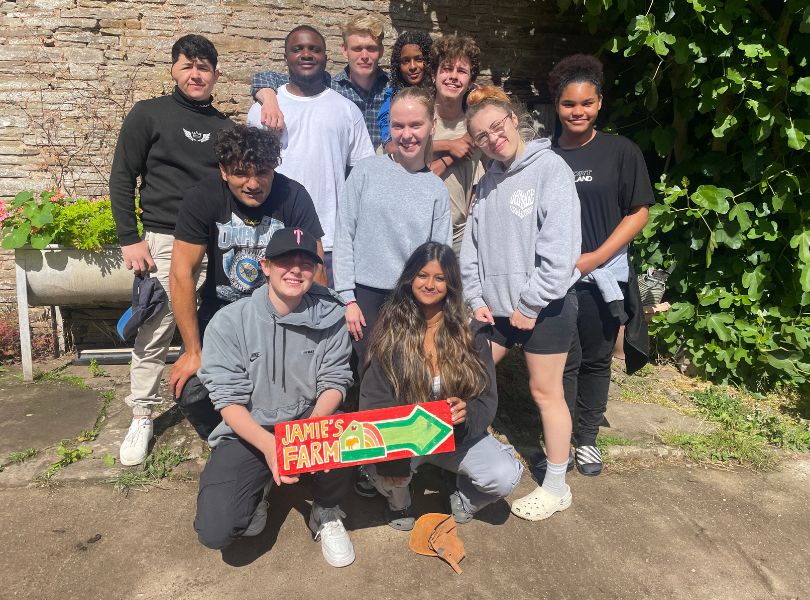
That’s why the contrast we see on the farm matters so much. Here, children watch men and women share roles of care, leadership, graft, creativity and calm authority. They see adults modelling independence and cooperation, agency and vulnerability. They get to experience relationships built on respect rather than control, often for the first time. Children are also asked to give up their devices and access to social media during their time with us, enabling them to be present, and fully engage with the work and each other.
Sadly, many of the spaces in education that once helped children build agency, creativity and self-expression are shrinking. When those opportunities disappear, children become more vulnerable to the pull of extreme, manipulative role models. When they feel valued and trusted, that pull weakens.
“Teaching respect, consent, and emotional intelligence in schools can help young people form healthier relationships and challenge harmful stereotypes. Girls often say that adults dismiss or minimise sexism they experience. Taking their concerns seriously and involving them in conversations about solutions would make a big difference.”
The manosphere impact on young women highlights how complex and challenging this issue is. If we want girls to grow up confident and safe, and boys to grow up with healthier models of masculinity, we must surround young people with real examples of people living and relating differently. We must protect the spaces that give them a sense of purpose, belonging and connection, and make sure every child has the chance to contribute meaningfully and feel powerful in healthy, hopeful ways.
Crucially, we must support the boys who are most vulnerable to being drawn into these online worlds, offering them exactly what Jamie’s Farm provides: purposeful real work, a sense of contribution, the experience of belonging in a wider group, and time to reflect alongside male and female peers. It’s in these mixed, relational environments focused on strengths, that all young people can discover the most positive versions of themselves.