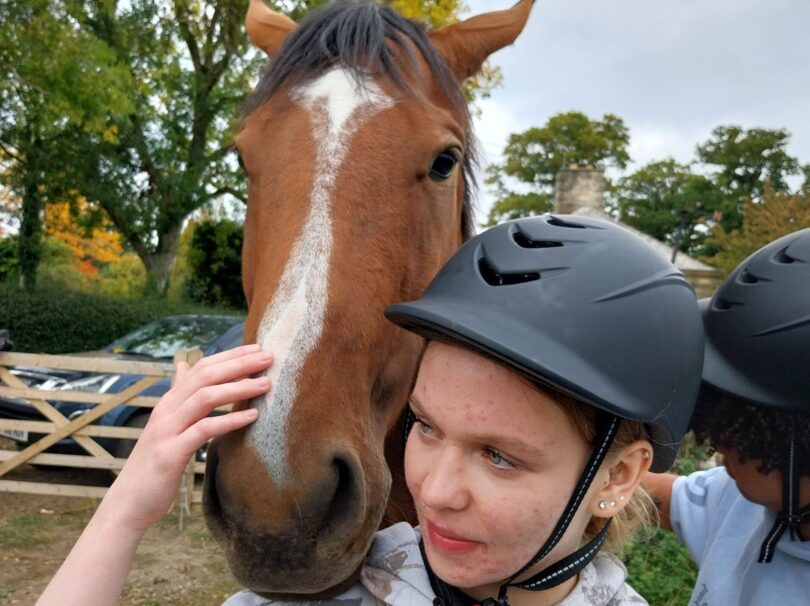
We are asking the wrong question about young people and social media.
As debate grows around restricting smartphone use for under-16s, most attention has focused on how to limit screen time. But from our experience working with more than 20,000 young people, the real issue is not what we take away. It is what we put in its place. At Jamie’s Farm, we have spent the last 20 years seeing what happens when phones are removed from the picture. Over that time, more than 20,000 young people have handed in their phones at the start of their stay with us and not seen them again until they leave five days later.
What we have learned is simple. Removing phones alone does not improve a young person’s wellbeing. What matters is what replaces them.
Why removing phones is only part of the answer
When phones are put away, something important happens. Space opens up.
Young people begin to notice one another again. Conversation becomes easier. Attention settles into what is happening around them, rather than being constantly pulled elsewhere.
We see this shift week after week. A young person who arrives distracted or withdrawn begins, over time, to engage more fully with others, with the environment, and with themselves. By the end of the week, we often hear teachers say: “I don’t recognise this child.”
But the real change does not come from the absence of the phone. It comes from what takes its place.
What young people need instead of screen time
If we simply reduce access to social media, we risk leaving a gap. And that gap matters. The question is not only how to limit screen time, but what we are offering young people instead.
At Jamie’s Farm, removing phones creates the conditions for something else to take root: resilience, responsibility, strong in-person relationships, and a sense of being a contributer. These are the foundations that support long-term wellbeing.
On our farms, what replaces the phone is simple and very real:
· meaningful responsibility, such as feeding animals or cooking for others
· shared work that requires cooperation and trust
· time outdoors, with physical activity and rhythm to the day
· adults who also put their phones away and give young people their full attention
These are not new ideas. But for many young people, they are increasingly rare.
Without opportunities to build resilience and confidence through real-world experience, some young people struggle to develop the emotional strength and independence they need for later life. The narrative they form of themselves too often is that they are irrelevant and a failure which can lead to poor mental health and joining the huge numbers of young people who feel unemployable.
Building confidence and resilience in young people
With the right conditions in place change happens fast in children due to their neural plasticity and quest to build identity.
A young person starts to see themselves differently. Not in comparison to others on a screen, but in real terms: as capable, as contributing, as someone who matters. It does not need a farm for the key ingredients to help positive develop occur and none of it is rocket science. So much of what the world offered children shaping childhood and independence has gone and we need to restore the balance of engagement beyond screens and social media.
We already know about how young people learn: through encouragement, purpose and positive reinforcement, and a sense of belonging.
Looking beyond the social media debate
This is why we believe the current national conversation needs to go further. Limiting access to smartphones may be part of the answer. But on its own, it is not enough.
Young people need opportunities to belong, to be trusted, and to contribute to something beyond themselves. Without that, removing a phone simply takes something away. With it, we begin to offer something back.
Over many years of working with young people, we have seen this pattern again and again. When given the right environment, young people do not withdraw or disengage. They step forward.

Kieran, a 22-year-old farm worker at our Bath site, is a powerful example. At present he is walking 320 miles from Bath to Skipton to raise money for Jamie’s Farm. His foster mum, Beccie, reflects:
“Over the three years Kieran has been helping at Jamie’s Farm, he has thrived beyond recognition. He has grown in confidence and independence, alongside a sense of humour that is now almost as big as his smile. At Jamie’s Farm he has found his tribe and can be true to himself.”
Walking alongside Kieran recently, I was struck by his quiet determination and sense of possibility. It was a powerful reminder of what can happen when young people are given the space and support to grow.
What comes next
As the conversation continues, our hope is that we do not only focus on restriction, but on what we are willing to build in its place.
The challenge is not simply to reduce screen time, but to rebuild the real-world experiences that help young people thrive.
Because when the phone goes away, something else needs to begin.
Author: Tish Feilden