Across the UK, wetlands have declined dramatically, but at Haugh Field Farm a different story is unfolding. Through a partnership with Ribble Rivers Trust, six hectares of wetland and 1.2km of waterways have been restored, creating new habitats for wildlife and helping to strengthen the local ecosystem, while also helping build climate resilience in the face of more frequent floods and droughts. From the return of wading birds to the appearance of otters along newly opened streams, the impact is already being seen. Here, Rob Carnie reflects on the journey so far and the lessons it holds for farming, conservation and engaging young people in nature conservation.
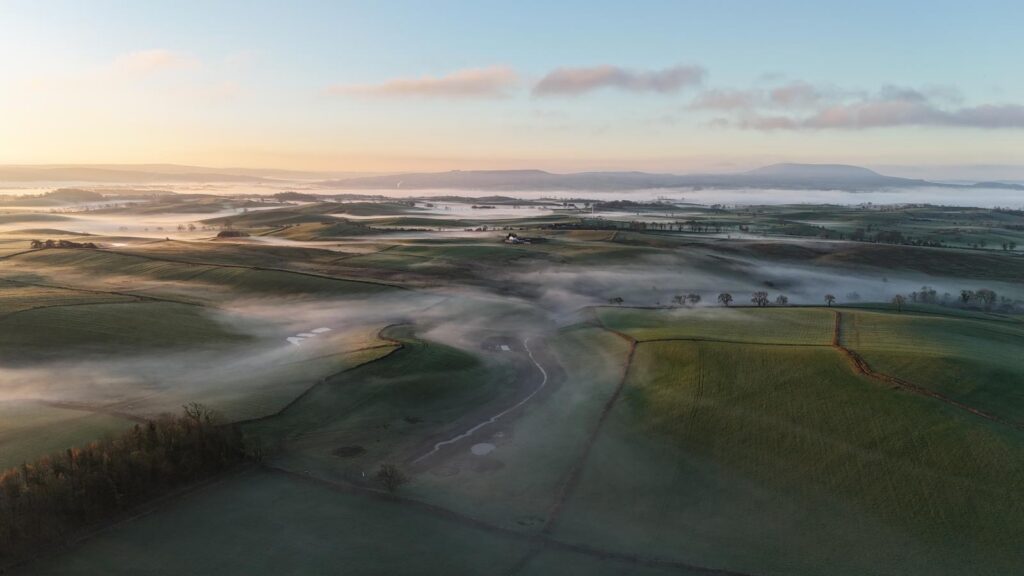
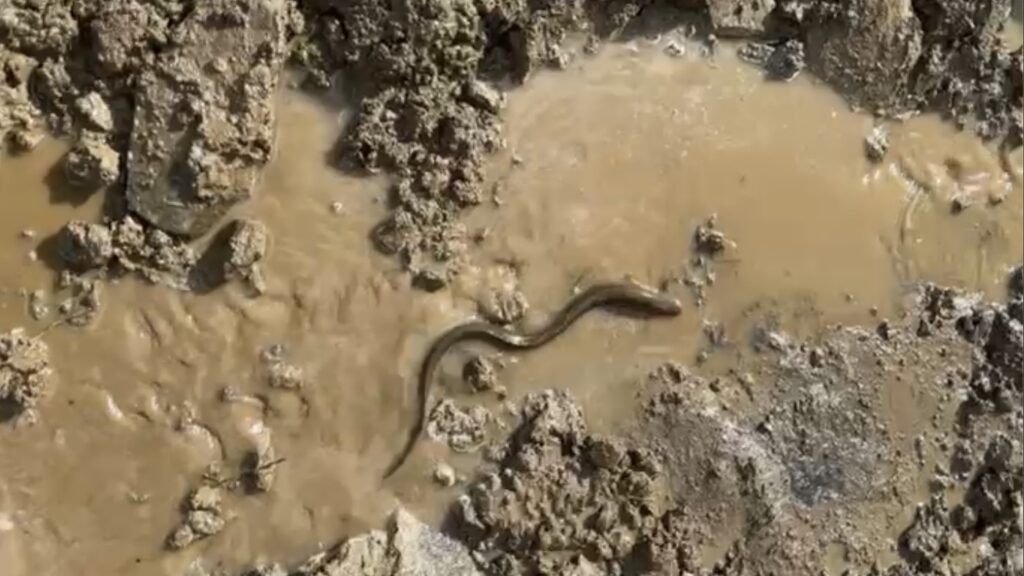
In 2022 Skipton farm manager Mark Carnie discovered a European eel in one of the farm’s old culverts, used to manage water drainage. Inspired by the sighting, Mark contacted the Ribble Rivers Trust – an organisation dedicated to improving the River Ribble and its wider catchment – seeking advice.
Immediately recognising the significance of the sighting, the trust nominated Haugh Field Farm to become one of 12 sites taking part in the Room for Rivers: Ribble Revival programme, as supported by the Government’s Species Survival Fund.
Two years on we are excited to announce the completion of this collaborative project, in which six hectares of wetland and 1.2km of streams have been restored.
Why Wetland Restoration Matters for Nature Recovery
Running through the heart of this ambitious habitat creation project is the restoration of the farm’s natural water course.
Wetlands are vital networks in our landscape, often compared to bloodlines in the body. They play an invaluable role preventing floods and mitigating drought. However, despite being an ecologically essential habitat, approximately 90% of wetlands in the UK have disappeared due to agricultural and urban expansion. Our hope is to counter this trend.
Having already seen an irrefutable boost in biodiversity since the farm transitioned to regenerative practices in 2022, the new wetland offers young people who come to visit further meaningful and hands-on experience of nature in recovery.
The Ribble River Trust considers four factors of a well functioning river eco system:
- Water quality
- Water quantity
- Habitat health
- Habitat connectivity
Featuring a beck (a northern term for a brook or stream), which feeds into the River Ribble, Haugh Field Farm is uniquely positioned when looking to improve the functionality of these factors. It was also clear from the outset of this project that Jamie’s Farm and Ribble Rivers Trust are equally driven to support a national movement towards more resilient landscapes and communities, through education and engagement.
Restoring Natural Waterways to Improve River Health
With experts on hand, the design of the wetland set out to follow the farm’s natural water course (its hydrology). While the Romans first began draining Yorkshire’s historic fenlands, it wasn’t until the mid-nineteenth century that British farmers widely adopted the use of land drains to prevent water logging. Dug and buried below ground, these land drains were originally constructed of baked clay pipes and laid in lateral drainage lines, running downslope at carefully spaced intervals.
Pertinently, Haugh Field translates directly as “wet field” and features a lattice work of such land drains—some modern but many remain their original clay counterparts.
Efforts to lower the water table were historically a means to establish more favourable pastures for grazing. These land drains were fed into ditches and culverts, encouraging the rainfall to shed from the farmland as quickly as possible. The accumulated impact of wetland drainage paralleled extensive efforts to deepen and straighten rivers across the UK, dramatically altering the landscape and the primary cause of the loss of wetland habitat.
Removing Culverts to Reconnect Streams and Wildlife Habitats
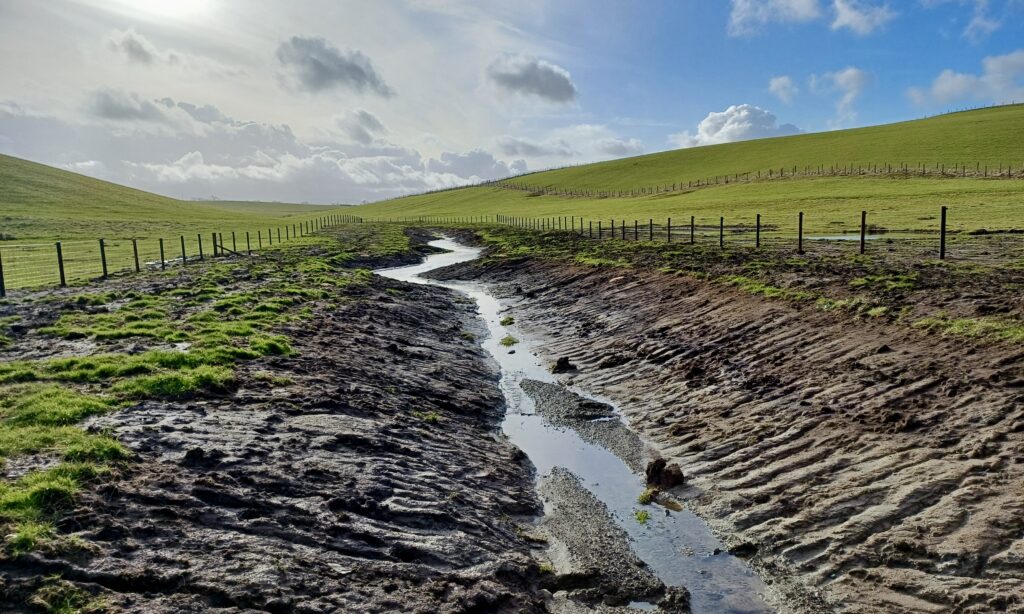
The first steps necessary to restore the four ecological factors of our watercourse was to begin de-culverting and opening the drainage network previously forced below ground, known as day-lighting. With natural light and new accessibility, the quality of the watercourse has immediately improved and is now attracting an abundance of new wildlife. These open streams, through their restored connectivity, now make up some of the first tributaries feeding into Swinden Gil Beck, which moves through the southern fields of the farm, running west for approximately 2km where it eventually converges with the River Ribble.
Rather than trying to wick the water from the fields as quickly as possible, making the rain someone else’s deluge to deal with, by reprofiling the slopes and introducing a series of bends, the water’s flow has been slowed and its depth increased. As such, the quantity of water in the catchment has increased. Likewise, leaky-dams and stone baffles further slow the flow at desirable points to provide backwaters, suitable for a variety of new life including fish. This variation of water-flow has established a series of ecological niches (habitats), which collectively contributes to the overall health of the catchment.
Creating Ponds, Scrapes and Still Water Habitats
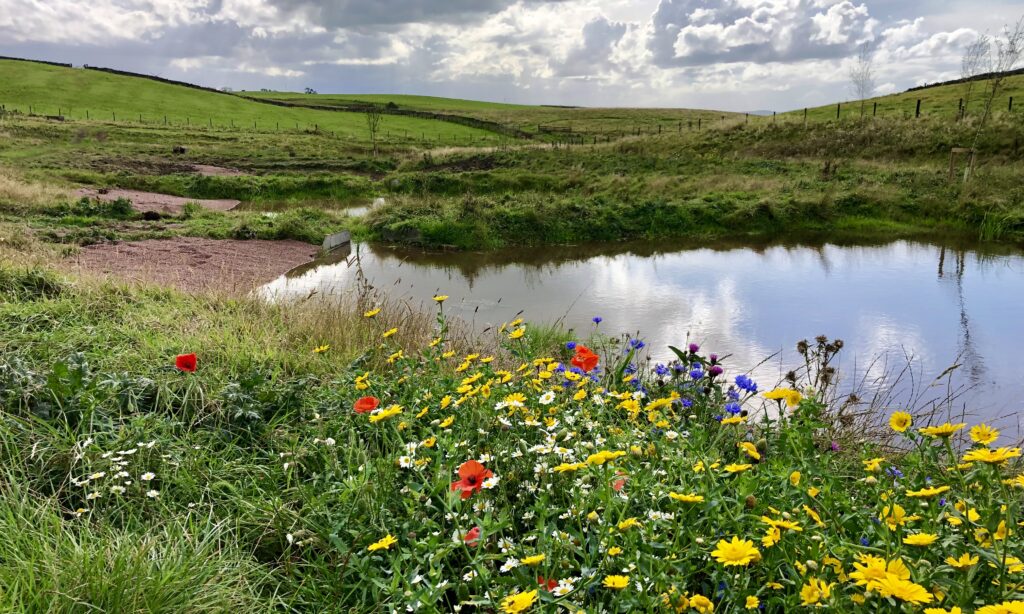
In addition to de-culverting, three new interconnected ponds have also been created. The combinations of deep and shallow zones are critical to a rich mosaic of freshwater habitats for amphibians, mammals and fish. Each pond is connected in a series of tiers by shallow, stony riprap spillways, which allow the waters to flow into the pond below while the stiller waters of these ponds provide calm refuges for aquatic life.
A larger auxiliary pond has been created with a “regeneration zone”, which employs aquatic plants and a gravel bed to oxygenate the water so that it is suitable for swimming in. Finally, a succession of ephemeral scrapes (ponds shallow enough to fill with winter rainwater but which recede through summer, much like a floodplain), provide optimal feed grounds for wading birds and further strengthens the aquatic food web.
Boosting Biodiversity Through Wetland Habitat Creation
A guiding principle of Regenerative Farming is conservation which is integrated in an agricultural setting. Ecologically sensitive practices have overarching benefits for food production and the protection of our natural landscape. For example, by redirecting and reducing surface water we hope to prevent both soil erosion and the wash-out of juvenile fish and eggs further downstream. Our goal is to work with nature and mimic the natural ecological functions unique to wetland habitats.
Planting Native Wetland Species for Long-Term Recovery
Another primary focus of the project was the reintroduction of native wetland plants which thrive in and alongside watercourses. These plants were all sourced from local providence (place of origin), to protect their genetic lineage and ensure their adaptation to the Yorkshire climate.
These include 20 individual species of native trees and shrubs, 25 species of specialised aquatic plants, and 15 different species of reeds, sedges and grasses.
Curated to enrich the site’s topographical (physical) features the conversation area now boasts the early stages of a series of ecological niches, including willow scrub to stabilise the riverbanks and a hazel coppice to provide greenwood for craft session. Furthermore the wetland is now home to a number of species in national decline:
- Juniper, considered a priority species by the UK Biodiversity Action Plan (BAP)
- Alder Buckthorn, a critical food source for the brimstone butterfly
- Wild Service Tree, a rare food source for insects and birds
- Black Polar, Britain’s most endangered native tree
With wildflower seed also now sown, the conditions have been set to kick start the natural succession of the wetland habitat and offers the opportunity for visiting groups to see species they potentially might never otherwise encounter.
Welcoming Wildlife Back to the Wetland
With the watercourse flowing and the fresh growth of flora now firmly rooted, the wetland has already begun to see an astounding array of wildlife return. Insects and invertebrate numbers are increasing and so too are birds which depend on the wetland as a food source, namely curlew, oyster catcher and lapwing.
The benefit to these birds has been so substantial that the decision was made to dedicate a further piece of adjacent pasture to be left fallow (not cultivated or grazed), for ground nesting curlew whose national population has halved in just two decades.
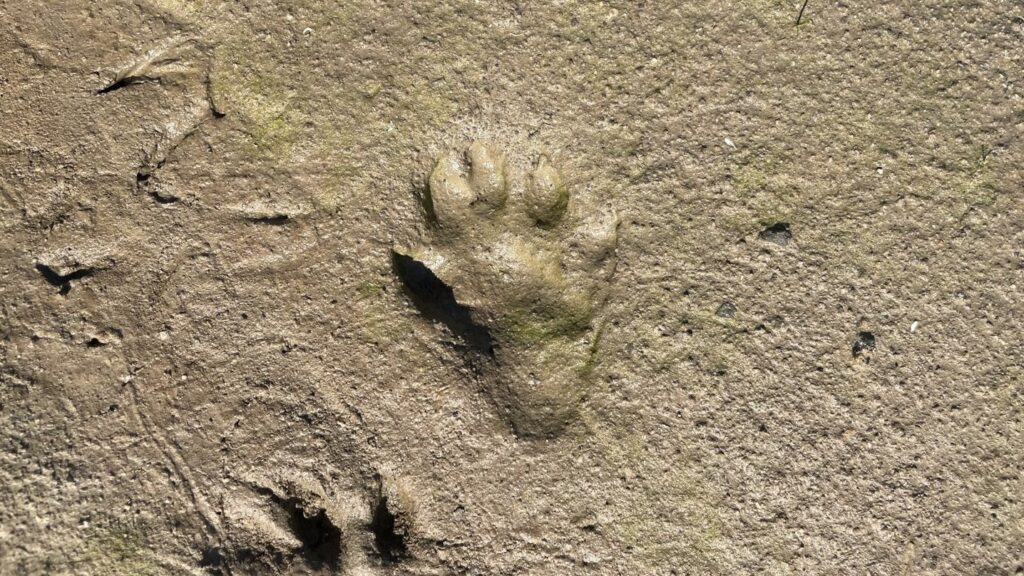
Perhaps most astounding to date, however, is the trail of otter footprints which were discovered along the banks of a newly opened stream. We are pleased to share that a wildlife camera-trap has subsequently confirmed that it has since returned. While otters occupy extensive territories through which they range, their presence in the landscape is a promising reminder of its potential to become a haven for local wildlife.
The Impact of Wetland Restoration on Farming, Flooding and Wildlife
While the benefits of the project are clearly already being witnessed – evidence that there is a confluence of interest where agriculture and ecology meet – we hope that our partnership with the Ribble Rivers Trust our wetlands will further prove that resilient landscapes help to cultivate resilient communities.
Regenerative Farming and Climate Resilience
Since work began on the wetland, 2024 was reported the eighth wettest winter in the UK on record and in 2025 Yorkshire saw the driest Spring in 90 years. Sustainable solutions within our sector must, therefore, focus on balancing environmental resilience while maintaining agricultural productivity, treating the farm as an entire ecosystem.
Better regulated water cycles improve and maintain soil health by reducing the frequency and severity of soil erosion caused by water logging during heavy rainfall. Likewise, the improved hydrological function of our wetland can mitigate drought in neighbouring fields by recharging natural reservoirs of water stored underground (aquifers). Not only does our wetland support pollinators and species which act as natural pest control, the reed beds and aquatic plants also aid water-filtration by absorbing any excess nutrients leaching from agricultural runoff.
Moreover, the unique conditions of the wetlands are known to sequester (absorb and store) carbon, while the canopies of our new trees will create a cooler microclimate during increasingly common heat waves, much to the benefit of our livestock. Such effects are far reaching and yet have all started with the vital act of regenerating our water cycle.
Connecting Young People with Nature Recovery
Unique to Jamie’s Farm programme is the immersive nature of the experience. The wetland project has upheld our offer. It has provided a vital opportunity for schools and students to partake in meaningful work with tangible, shared outcomes through active learning and engagement.
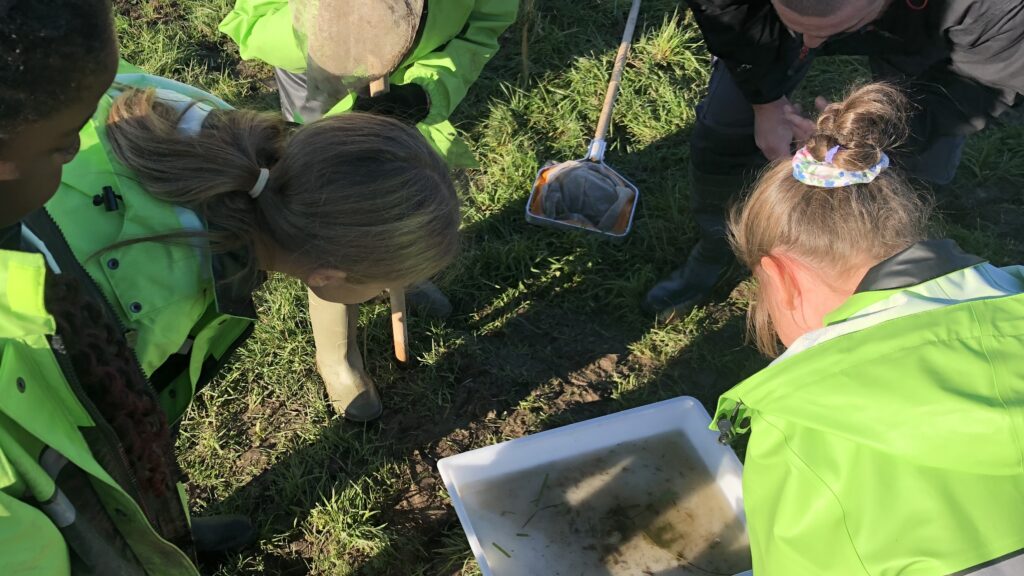
In true Jamie’s Farm fashion, visiting groups have been involved with every step of the wetland’s creation, helping not only to plant and protect the site but also partake in the vital on-going monitoring of the waterways, testing water quality and surveying invertebrates.
As research attests, a strong sense of nature connection fundamentally benefits our physical and emotional wellbeing. Furthermore, we strongly believe that cultivating respect and appreciation for our environment through memorable encounters with the natural world, in turn, forms a framework and reference for what farming alongside nature looks like. What emerges is the growing edge where Regenerative Farming becomes what we believe is Regenerative Education .
Looking Ahead: A Restored Wetland for Future Generations
Transformation is central to both our residential trips and our farming practices, cultivating in each a harmonious and hopeful relationship with our environment and each other.
In keeping with our therapeutic programmes, restoring a wetland is a long-term initiative. Its success has been and will continue to be ensured by strong and collaborative partnerships, the generous spirit of volunteers, and the hard graft and enthusiasm of staff and young people. With their help we can continue to demonstrate that taking care of our environment is a direct investment in their immediate lives and the lives of generations to come.
As this emerging habitat further establishes itself and Haugh Field Farm continues to flourish, so too does our capacity to offer a sense of belonging and purposeful connection to our natural world; it is no coincidence that time and time again we are told by visiting groups that playing in a local stream is regarded as one of their most joyful and memorable highlights.
Safe to say, we are delighted to not only be able to share the simple and yet powerful experience of exploring a rich and healthy wetland but also provide young people the opportunity to contribute to its ongoing regeneration.